Gyeonghoeru Pond at Gyeongbokgung: Stage for Royal Banquets
Apr 28, 2026 · artive
The Gyeonghoeru banquet hall and its pond at Gyeongbokgung—where Joseon hosted royal feasts and foreign embassies, and how architecture frames the water.
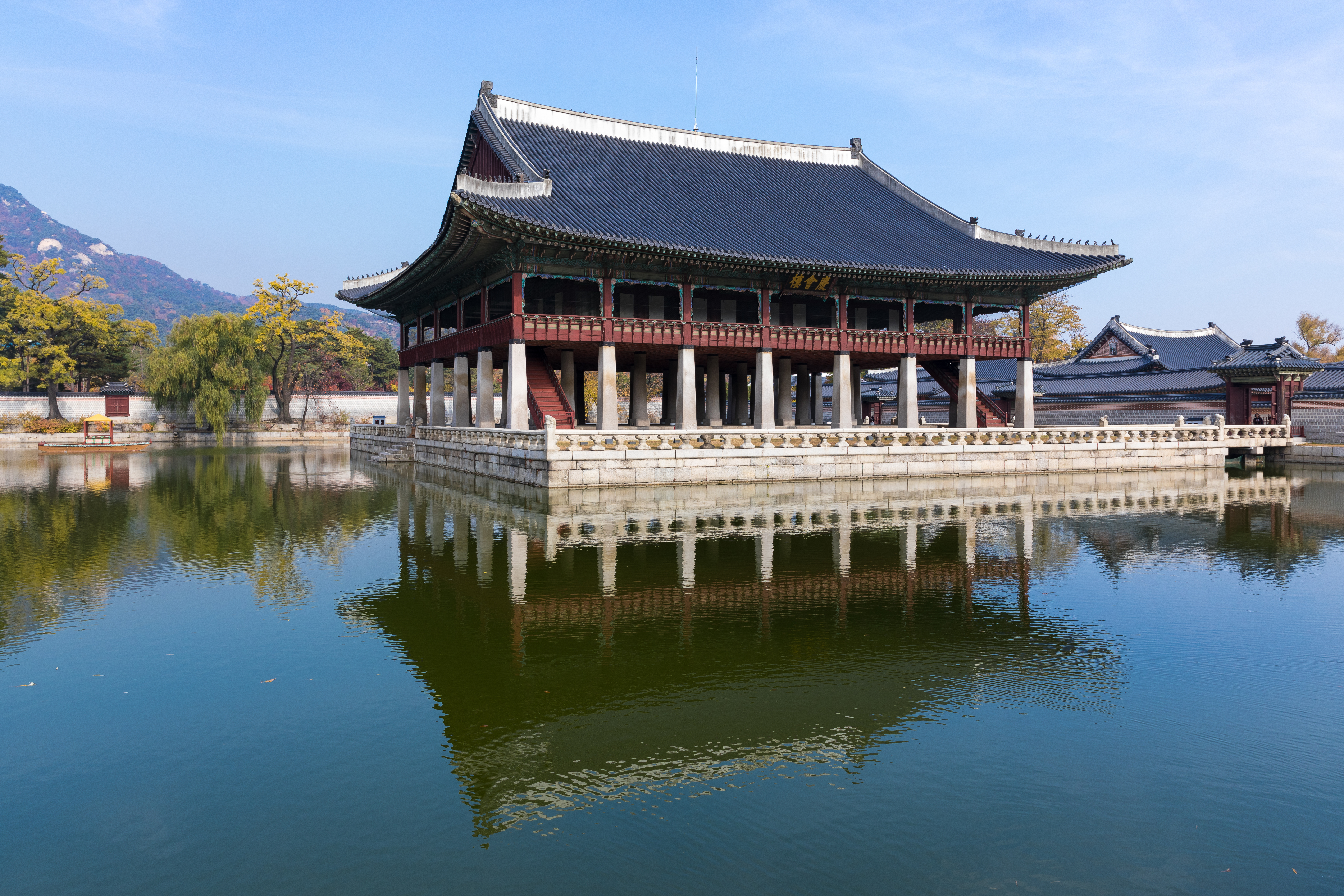
1. Introduction: where politics and culture met
The Gyeonghoeru (慶會樓) complex is among the most photographed sectors of Gyeongbokgung—a hall and pond built for royal banquets and diplomatic display.
It is ceremony made landscape: where envoys saw Joseon splendor and where state ritual overlapped with poetry and music.
2. History
2.1. Construction
Planning began under King Taejong; the hall as we know it matured under King Sejong.
Critics rank it among the finest achievements of traditional Korean palace architecture.
2.2. Functions
Gyeonghoeru hosted state banquets and receptions for foreign missions.
It was also a stage for culture—poetry gatherings, music, dance unfolded above the water.
2.3. The name Gyeonghoe
“Joyful assembly” wishes auspicious gathering and national fortune—language suited to a hall of celebration.
3. The pond and circulation
3.1. Size and shape
The pond is large, roughly square in plan—a geometric foil to the hall’s layered eaves.
Depth is on the order of about 1.5 m—enough for small boats to move during banquets and processions (confirm current interpretation with on-site guides).
3.2. Placement of the hall
Sitting on the pond’s axis, Gyeonghoeru becomes a stage visible from every shore—architecture as spectacle.
3.3. Bridges and approach
Approach bridges were carefully calculated in slope, width, and rhythm so procession reads as deliberate choreography.
4. Architectural aesthetics
4.1. Symmetry
The hall stresses bilateral balance—left mirrors right in massing and detail.
4.2. Vertical emphasis
Tall columns lift the eye toward sky—a common reading of palace verticals as aspiration.
4.3. Reflection
Still water doubles the hall—reflection as built-in ornament that changes with wind and light.
5. Cultural meanings
5.1. Politics on display
Banquets sealed alliances and rank; who sat where mattered as much as the menu.
5.2. Culture at court
Literati, musicians, and painters shared the same boards—high culture as statecraft.
5.3. Diplomacy
Embassies read Joseon through this lens—architecture, cuisine, music offered as arguments of civilization.
6. Contemporary significance
6.1. Engineering and craft
The surviving structure is evidence of timber skill and structural poise across centuries.
6.2. Conservation
Repeated campaigns remind us that heritage is maintenance, not a frozen postcard.
6.3. Witness to history
The pond has mirrored six hundred years of monarchy, war, and renewal—quiet archive in ripples.
7. Visitor guide
7.1. Good seasons
- Spring: fresh green on the eaves
- Summer: deep shade, lotus if planted nearby in wider grounds
- Autumn: maples in the palace grid
- Winter: snow on the stone balustrades (when it falls)
7.2. Highlights
- The hall itself
- Pond reflections
- Bridge sightlines
- Surrounding palace courts
7.3. Docent tips
- Stand at mid-pond view and test symmetry with your eyes.
- Compare direct view versus reflection—two compositions for one building.
- Imagine an embassy banquet—sound, color, rank.
8. References
[1] Korea Heritage Service. (n.d.). Gyeongbokgung. https://www.cha.go.kr/
[2] Gyeongbokgung official site. (n.d.). https://www.gyeongbokgung.go.kr/
[3] Encyclopedia of Korean Culture. (n.d.). Gyeonghoeru. https://encykorea.aks.ac.kr/
태그