Changdeokgung Secret Garden and Giverny: East–West Gardens and Nature in Painting
Apr 23, 2026 · Artive
An Artive editorial comparing the Joseon royal garden at Changdeokgung’s Huwon with Claude Monet’s Giverny along the axis of ‘garden experience.’ Historical and art-historical readings are for orientation only and do not replace scholarly work.
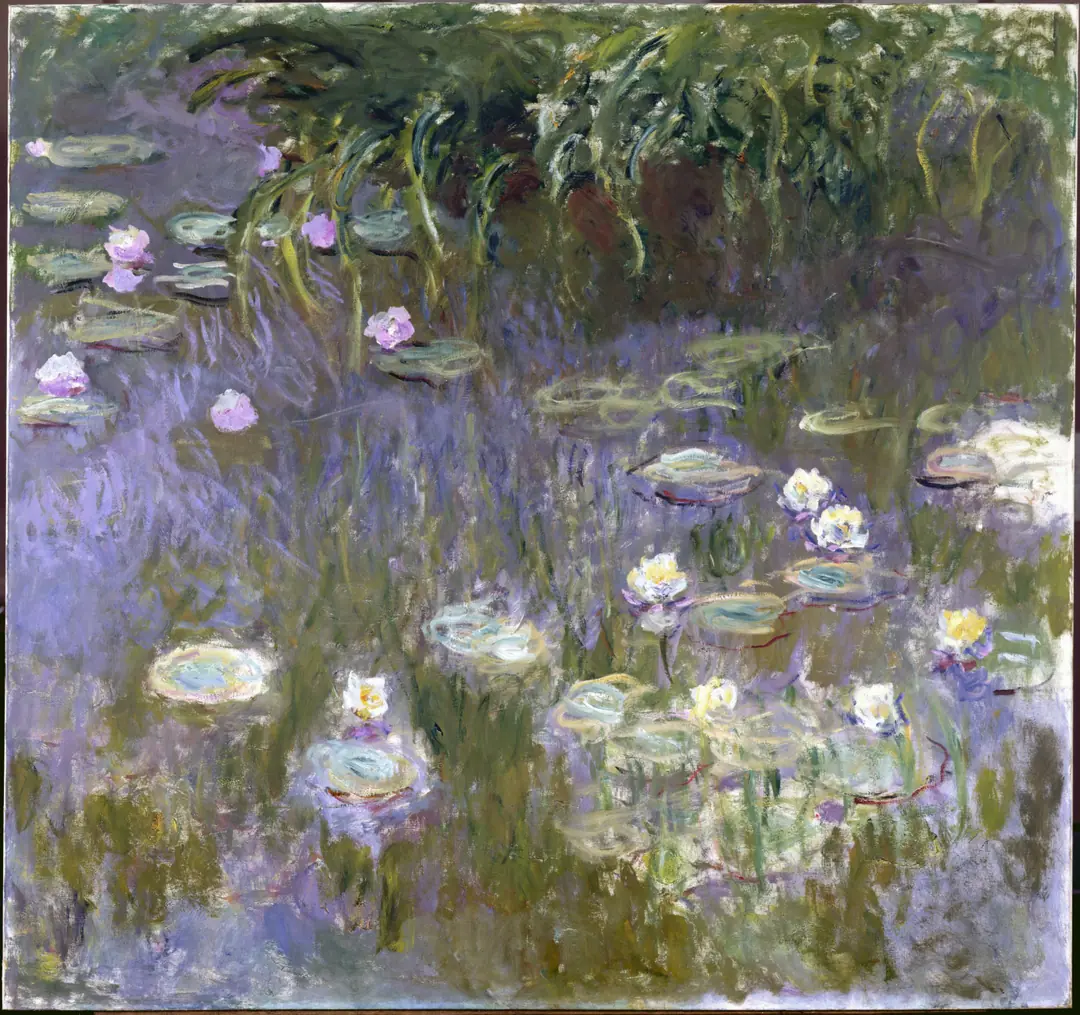
1. Artist essay: East and West framing nature
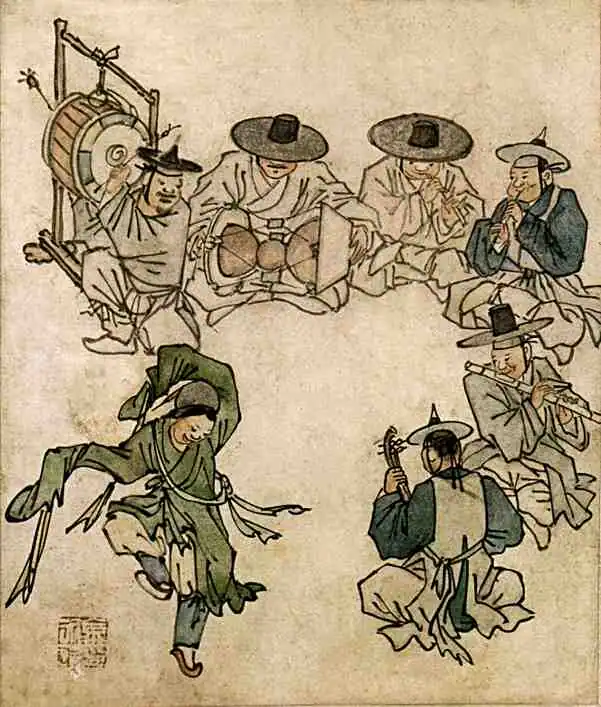
Source: Wikimedia Commons — public domain or license as stated on the file page.
In eighteenth-century Joseon, Danwon Kim Hong-do captured common people’s lives and natural scenery on the brush. His genre paintings preserve vivid everyday scenes; in true-view landscape (jingyeong sansuhwa), he described Korea’s mountains and rivers with a distinctly local feeling, moving away from purely conceptual pictures toward what he saw and felt.
That impulse resonates with how, in late nineteenth-century France, Claude Monet tried to fix on canvas the fleeting impression of nature as light shifted. Through plein-air study he explored changing light and color, returning to the same motifs again and again to record impressions across time.
The two painters worked worlds apart, yet both looked closely at nature and reinterpreted its essence through their own eyes. Where Kim Hong-do found Korean humor and mood in nature entwined with ordinary life, Monet caught ephemeral beauty in the play of light and pigment. Their works are not mere landscapes but reflections on how humans and nature meet in each era and culture.
2. City docent: Changdeokgung Secret Garden and Giverny—walking through nature
The nature that held these painters’ attention still moves visitors today. The Joseon royal Changdeokgung Secret Garden (Huwon) and Monet’s Giverny are emblematic places to sense East–West ideas of nature and art.
2.1. Changdeokgung Secret Garden: a royal retreat shaped with the land
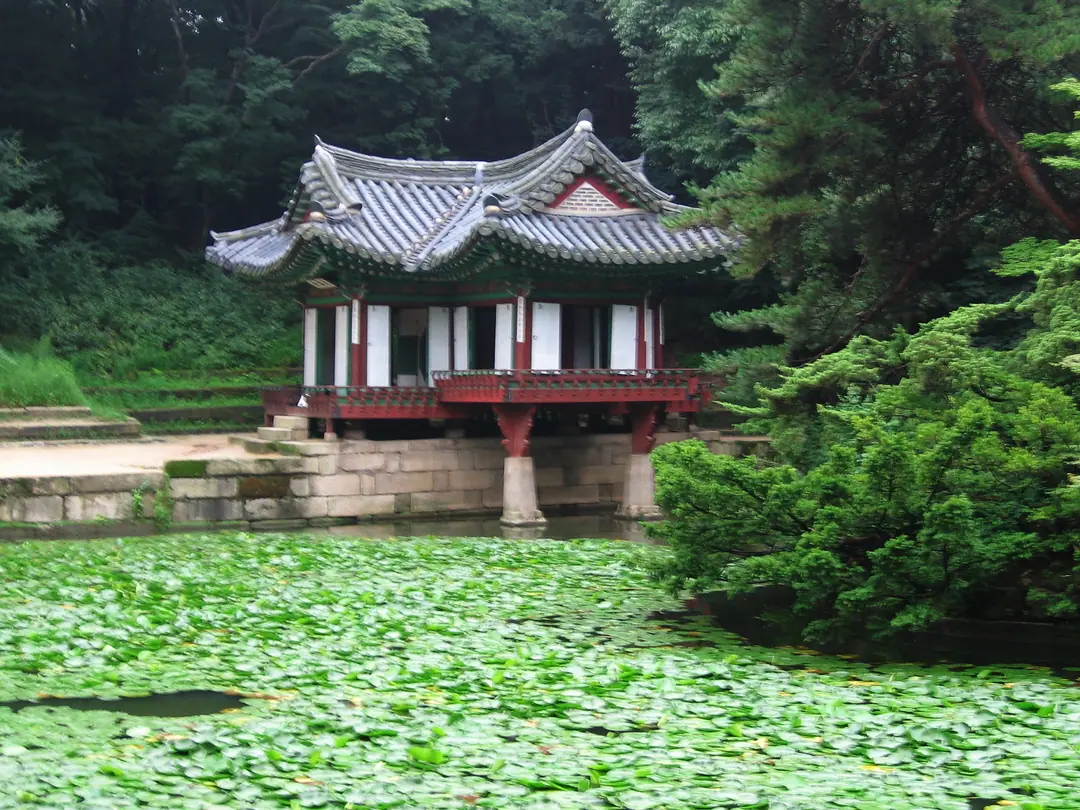
Work on the Secret Garden began in 1405 (Taejong 5). Unlike the more formal layout of Gyeongbokgung, it is praised as a masterpiece of Korean gardens that follow terrain—a space for royal rest, contemplation, and nature viewing. Borrowed scenery (gyeong, 借景) brings distant views into the garden, minimizing the artificial and foregrounding the natural.
Spot 1: Buyongji (Lotus Pond)
Docent note: A rectangular pond and a round island echo the “round heaven, square earth” (cheonwon jibang) worldview. With Buyongjeong pavilion and Juhamnu loft, the ensemble symbolizes royal learning and leisure. Monarchs composed poetry and debated with ministers here as the seasons changed the view.
Spot 2: Aeryeonji (Pond of Loving the Lotus)
Docent note: A small pond named for cherishing lotus—intimate, almost hidden, as approachable as Kim Hong-do’s humble genre scenes. Visit when summer lotus opens to feel the garden at its fullest.
Spot 3: Ongnyucheon (Jade Stream)
Docent note: Water was led to wind among rocks where poetry was recited—listen for nature’s “music.” Many literati drew inspiration from this soundscape.
2.2. Monet’s Giverny: a laboratory of light and color

From 1883 until his death Monet lived at Giverny, designing and tending a garden that became both muse and giant canvas. Countless Water Lilies series grew here; plant choice and placement built harmonies and contrasts of hue.
Spot 1: Clos Normand
Docent note: The flower garden before the house—tulips in spring, roses in summer, sunflowers in autumn—reads like Monet’s palette in three dimensions.
Spot 2: Water Garden
Docent note: Japanese-style bridge, willows, and water lilies. Monet painted the lilies hundreds of times as light shifted. Morning, noon, and evening visits show how the pond’s color can transform.
Spot 3: Monet’s House
Docent note: Interiors and studio spaces Monet shaped himself, including his Japanese print collection—evidence of his fascination with East Asian aesthetics.
3. Artist vlog: a line from Seoul to Giverny
“At the still pond of Changdeokgung’s Secret Garden I read nature’s empty space; in Giverny’s lily pond I watch light dance. East and West speak different languages of landscape, yet the beauty we find there converges in one kind of wonder.”
4. Notice and disclaimer
This article is an editorial walk-through to support visits and travel. For tickets and hours, follow each site’s official information. Art history and chronology are kept to general introduction level.
5. References
[1] Korea Heritage Service. (2007, March 24). Genre painting: glimpsing old lives—Danwon Kim Hong-do. https://www.cha.go.kr/
[2] Claude Monet — Wikipedia. (n.d.). https://en.wikipedia.org/wiki/Claude_Monet
[3] Kim Hong-do — Wikipedia (Korean). (n.d.). https://ko.wikipedia.org/wiki/김홍도
[4] Encyclopedia of Korean Culture. (n.d.). Changdeokgung Huwon. https://encykorea.aks.ac.kr/
[5] VisitKorea. (n.d.). The king’s garden between palace and mountain—Changdeokgung Huwon. https://korean.visitkorea.or.kr/
[6] Fondation Claude Monet — Giverny. (n.d.). https://www.fondationmonet.fr/
Images: Wikimedia Commons and other sources with stated licenses.
태그