Jongmyo: The Symbol of Confucian Ritual Architecture
Apr 21, 2026 · artive
Jongmyo enshrines the spirits of Joseon royalty. Explore the masterpiece of Confucian shrine design and one of Korea’s defining architectural ensembles.
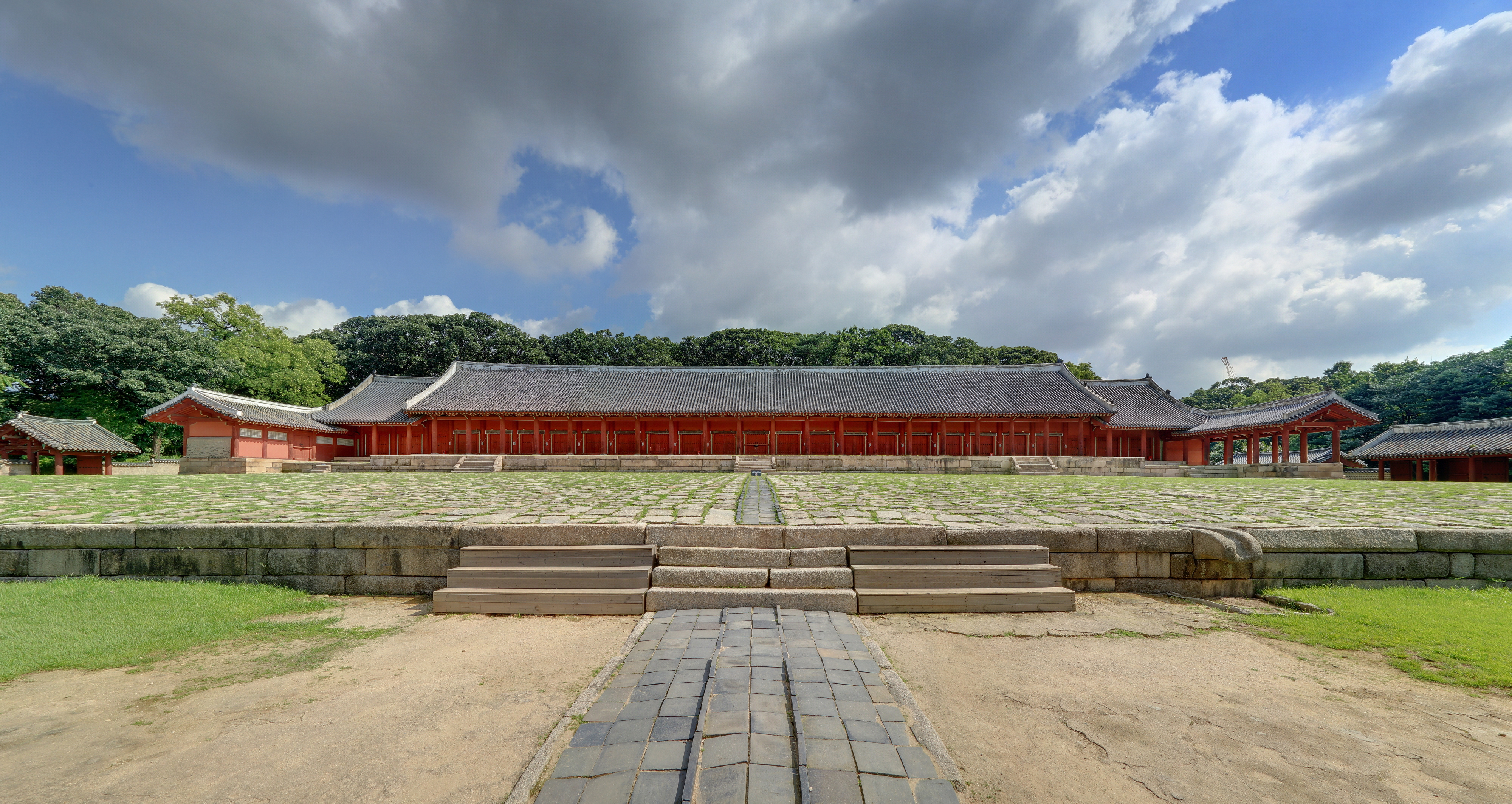
1. Introduction: The royal shrine of the Joseon house
Source: Wikimedia Commons — Hyolee2, CC BY-SA 3.0.
Jongmyo is where the spirits of Joseon kings and queens receive state sacrifice. It is not a “temple” in the Buddhist sense, but the pinnacle of Confucian shrine architecture in Korea—and one of the nation’s architectural masterpieces.
Founded in 1395 by Taejo Yi Seong-gye, Jongmyo has for more than six centuries asserted the legitimacy of the Joseon line.
2. Architectural structure: Confucian order in plan
2.1. Major precincts
The site organizes around Jeongjeon, Yeongnyeongjeon, and the ritual forecourt—a diagram of Confucian hierarchy.
Jeongjeon houses the more recent royal spirits; Yeongnyeongjeon, the earlier generations. The split expresses succession through time.
2.2. The length of Jeongjeon
Jeongjeon is exceptionally elongated—on the order of 110 m—making it among the longest timber halls in Korea.
That length accommodates many spirit chambers, each king or queen in a defined bay along one continuous roof.
2.3. Ritual space
Before the halls lies the court where the great state rites unfold.
Processional lines, placement of officials, and arrangement of offerings follow classical Confucian liturgy with architectural precision.
3. Architectural philosophy: Order and symmetry
3.1. Symmetry
The ensemble pursues near-perfect symmetry—hall wings, stairs, and paving echo left and right.
Symmetry here reads as cosmic order, a Confucian ideal of balance without excess.
3.2. Straight lines
Posts, tie-beams, and roof ridges emphasize straight geometry.
Straightness suggests clarity and moral uprightness—virtues prized in state Confucianism.
3.3. Emptiness as design
Generous voids between buildings and the broad ritual yard privilege emptiness as experience.
Open ground becomes space for contemplation and slow movement.
4. Materials: The honesty of wood
4.1. Timber as moral medium
Wood is a product of nature—appropriate for rites that bind heaven, earth, and human community.
Grain and color remain visible; there is little impulse to disguise the material.
4.2. Minimal surface treatment
Members are lightly finished, preserving natural section and figure.
That restraint mirrors Confucian preference for plainness over display.
4.3. Color restraint
There is no polychrome spectacle; tone stays close to weathered wood.
The palette supports a mood of gravity and continuity.
5. Religious meaning: Ancestral rite at the center of state
5.1. What the sacrifice accomplishes
The great rites knit the reigning monarch to predecessors across centuries.
The king bows not only to parents but to the full lineage that authorizes the throne.
5.2. Filial piety (hyo)
The shrine dramatizes Confucian filial piety—the living son-of-heaven nourishing the spirits as a dutiful child would parents.
5.3. Dynastic legitimacy
Who is enshrined—and who is not—has always been political theology. Jongmyo’s roster certifies orthodox succession.
6. Historical change: Conservation and revival
6.1. After the Imjin War
Fires and battles destroyed much; rebuilding began immediately because the dynasty could not rule without a functioning royal shrine.
6.2. Colonial period
Japanese authorities reorganized management; some rites were curtailed or forbidden.
The buildings themselves remained in place.
6.3. Jongmyo today
The site is UNESCO World Heritage. The Jongmyo Jeryeak ritual music and dance are Intangible Cultural Heritage.
The annual Jongmyo Royal Ancestral Rite in May still draws visitors from around the world.
7. Contemporary lessons: What we take away
7.1. Order and harmony
The architecture argues that public life needs visible structure—symmetry and axis as shared moral scenery.
7.2. The beauty of restraint
Without gilt or curvilinear excess, the precinct achieves quiet grandeur.
Restraint can carry more authority than ornament.
7.3. Connecting time
The rite makes past sovereigns present to the living court.
We might ask how our own institutions honor—or forget—those who came before.
8. Visitor guide: Experiencing Jongmyo well
8.1. Best times to visit
- May: When the royal ancestral rite is performed (public viewing by reservation or ticket policy—check official sites)
- Spring (April–May): Fresh green along the approach
- Autumn (October–November): Color in the woodland buffer
8.2. Highlights
- Jeongjeon: The primary spirit hall
- Yeongnyeongjeon: Earlier generations
- Ritual courtyard: Where processions align
- Forest belt: Mature trees that screen the city
8.3. Docent tips
- Walk the symmetry axis slowly and feel the Confucian grid
- Study stone markers and pavement as choreography frozen in plan
- If you attend the rite, listen for music that has crossed six centuries
9. References
[1] Cultural Heritage Administration (CHA). (n.d.). Jongmyo. https://www.cha.go.kr/
[2] Royal Shrine Management (Jongmyo) official website. (n.d.). https://jongmyo.cha.go.kr/
[3] Encyclopedia of Korean Culture. (n.d.). Jongmyo. https://encykorea.aks.ac.kr/
[4] Cultural Heritage Administration. (2023). Understanding Confucian Ritual Architecture. CHA publication.
태그