Deoksugung: A Palace Carrying Korea’s Modern Upheaval
Apr 08, 2026 · artive
Deoksugung, where late Joseon and modern Korean history are deeply inscribed. Through Seokjojeon, Junmyeongjeon, and vanished architecture, encounter Korea’s modern and contemporary past.
1. Introduction: A palace of tragedy
Deoksugung differs from other royal palaces. It lacks Gyeongbokgung’s grandeur and Changdeokgung’s elegance. Instead, the tragedy of Korea’s modern and contemporary history is inscribed here.
Originally a small palace called Gyeongun-gung, after Gyeongbokgung burned in the Imjin War (1592), kings including King Seonjo stayed here, and later kings used it. When King Gojong made it the main royal residence, Deoksugung became the stage of Korea’s modern era.
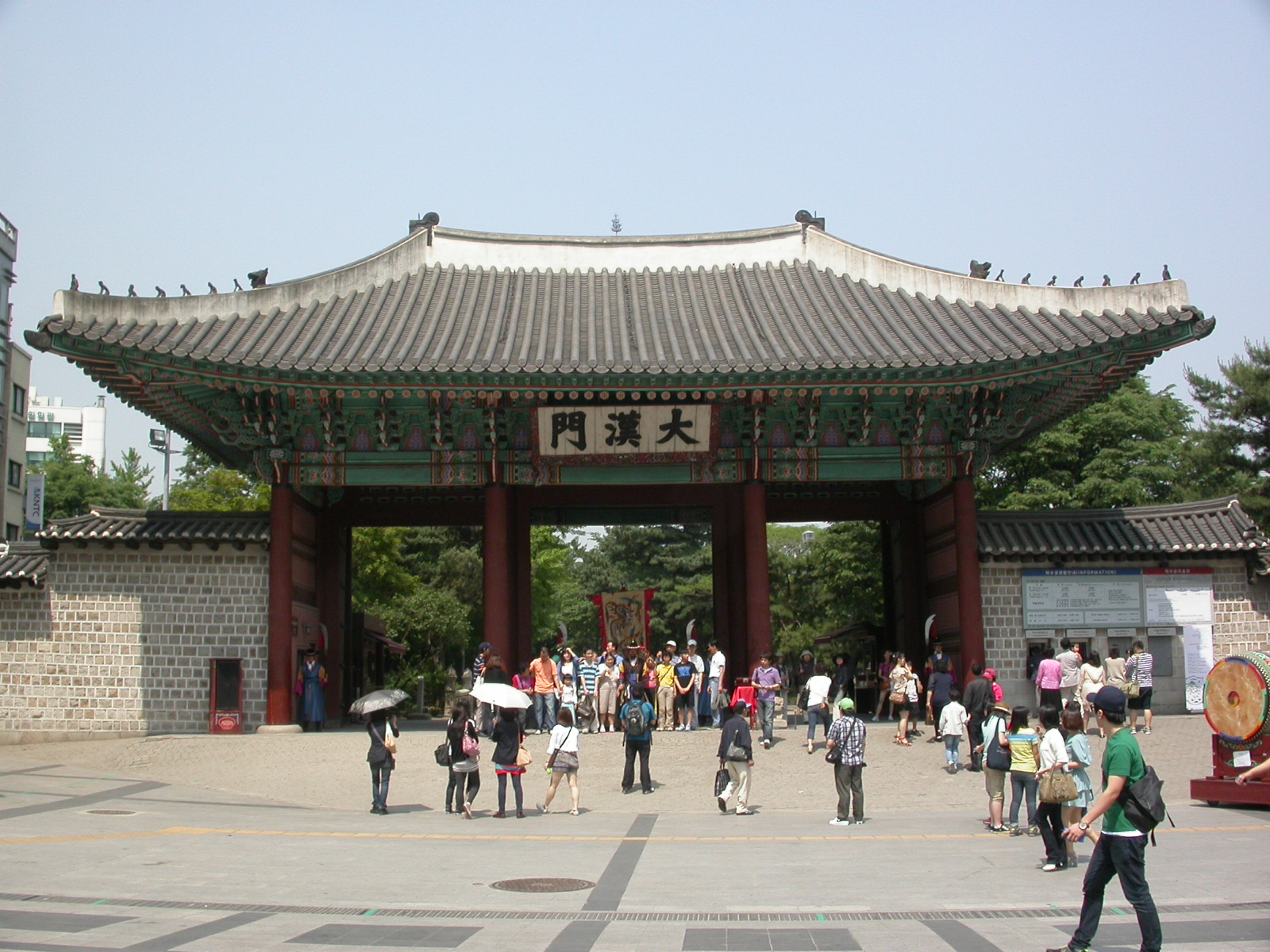
Following the entrance route, the axis Daehanmun → Junghwamun → Inhwamun unfolds. Rather than a single sweep of vast halls, the distinctive reading of Deoksugung is how modern halls (Seokjojeon) and Joseon halls (Junghwajeon, Seokgeodang) stand side by side within one enclosure, as if walking narrow lanes between eras.
2. Spatial layout: Where tradition meets modernity
Deoksugung’s hallmark is Korean traditional architecture alongside Western architecture. It reflects the abrupt change Joseon experienced at its end.
2.1. Traditional spaces: Junghwajeon and Seokgeodang
Junghwajeon (中和殿): The throne hall
Junghwajeon is the most important traditional building at Deoksugung, where King Gojong received his officials.
Its architecture embodies the essence of Joseon architecture. Yet its symbolic power lies in Western-style buildings standing right beside this traditional space. On the terrace you feel two eras in one neighborhood—the tiled roofline of Joseon and the stone walls of Seokjojeon.
Seokgeodang (石魚堂): The queen’s quarters
Seokgeodang was where Empress Myeongseong resided. It shows the beauty of traditional Korean timber construction.
Docent tip: Walk slowly around Seokgeodang. Notice the fine woodwork and ornament.
2.2. Modern spaces: Seokjojeon and Junmyeongjeon
Seokjojeon (石造殿): A Western palace
Seokjojeon is Deoksugung’s icon. Completed in 1909, it is Korea’s first Western-style royal palace building.
Photographs from around 1904 often frame Junghwajeon, Junghwamun, and Seokjojeon in one shot—a single image of the transition to modernity.
Seokjojeon expresses King Gojong’s openness to the West, yet also how rushed and chaotic Korea’s modernization was—Western outside, royal life adapted within.
Docent tip: Look at the stairs and fireplaces inside. They were novel in Korea at the time and show how far the king was willing to embrace Western technology.
Junmyeongjeon (中明殿): Gojong’s last residence
Junmyeongjeon was King Gojong’s sleeping quarters. After the Russo-Japanese War (1904), it was here that he resisted Japanese pressure.
In 1907 he sent envoys to The Hague to expose Japan’s aggression. When discovered, the Japanese army forced him to abdicate. That tragic moment unfolded at Junmyeongjeon.
Docent tip: Stand in the courtyard before Junmyeongjeon—one of the most painful spaces in Korea’s modern history.
3. History: From glory to tragedy
3.1. King Gojong and modernization (1864–1907)
Gojong was last king of Joseon and first emperor of the Korean Empire. He tried to adopt Western civilization; Deoksugung symbolized that modernization.
He chose Deoksugung over Gyeongbokgung as the main palace—a statement of a new era. Seokjojeon, electricity, railways—many policies began here.
3.2. Japanese invasion and forced abdication (1907–1910)
After 1904 the peninsula fell under Japanese influence. The 1905 Eulsa Treaty made Korea a protectorate; Gojong’s power shrank.
When the Hague mission was exposed, the Japanese army forced him to abdicate. He lost his throne at Deoksugung.
3.3. Colonial period and today (1910–present)
Under Japanese rule Deoksugung was co-opted as a symbol of empire; many buildings were demolished.
After liberation, restoration projects shaped today’s Deoksugung—a living museum of Korea’s modern and contemporary history.
4. Architecture: Dialogue of tradition and modernity
Traditional halls (Junghwajeon, Seokgeodang) show timber construction, tiled roofs, and ornament typical of Joseon.
Seokjojeon is first Western-style royal architecture in Korea—brick and stone, innovative for its time, built largely with Korean architects and craftsmen.
Tradition and modernity coexist in one compound, a physical record of how fast Korea changed.
5. Seasons: When to visit
Spring (Mar–May): Fresh green
Trees leaf out; the palace turns green. Quieter than the summer rush—good for unhurried viewing.
Summer (Jun–Aug): Deep green
Dense shade around Seokjojeon offers cool relief.
Autumn (Sep–Nov): Autumn leaves
Red foliage and leaves on the plaza before Seokjojeon are memorable.
Winter (Dec–Feb): Stillness
Snow quiets the compound; history feels suspended.
6. Practical information
6.1. Basics
- Location: 99 Sejong-daero, Jung-gu, Seoul (Metro Line 2 City Hall, Exit 1)
- Admission: Adults 3,000 KRW
- Hours: 09:00–18:00 (varies by season)
- Closed: Mondays (open if Monday is a holiday)
6.2. Tips
- Join a docent tour—especially for modern Korean history.
- Visit Seokjojeon interior to see royal life adapted to Western forms.
- Pause at Junmyeongjeon and reflect on Gojong’s final years.
- Allow at least 1.5 hours—small but dense in history.
- Evening visits—Seokjojeon lit at night is striking.
6.3. Map
- 네이버 지도: https://map.naver.com/v5/search/Deoksugung
- 카카오맵: https://map.kakao.com/link/search/Deoksugung
- Google 지도 보기
6.4. FAQ
Frequently asked questions
-
Q. How long should I budget?
A. 60–90 minutes for highlights, or 1.5–2 hours for a slower walk. -
Q. Are hours/closure days fixed?
A. They can change due to seasons, events, or maintenance. Check the official notice before visiting. -
Q. Is it okay on a rainy day?
A. Watch for slippery stone paths, but the palace can feel more atmospheric after rain.
7. References
[1] Cultural Heritage Administration. (n.d.). Deoksugung. https://www.cha.go.kr/
[2] Encyclopedia of Korean Culture. (n.d.). Deoksugung. https://encykorea.aks.ac.kr/
[3] VisitKorea. (n.d.). Deoksugung. https://english.visitkorea.or.kr/
[4] Seoul Metropolitan Government. (n.d.). Seoul palaces: Deoksugung. https://www.seoul.go.kr/
[5] Cultural Heritage Administration. (2023). Deoksugung and Korean modern history. CHA publication.
8. Hero image and license
The hero image is from Wikimedia Commons. For commercial use, check the file page license. Body text is prose-focused.
태그