Changgyeonggung: A Palace of Queens, Princes, and Sorrow
Apr 09, 2026 · artive
Changgyeonggung, where the tragedy of Empress Myeongseong and the lives of crown princes unfolded. Myeongjeongjeon, Tongmyeongjeon, and Chundangji tell another story of the Joseon royal house.
1. Introduction: A palace of tragedy
Among Seoul’s palaces, Changgyeonggung carries some of the saddest history. Built for queens, crown princes, and royal mothers, it is a space where women’s lives and tragedy are layered.
Founded in 1483 (Seongjong 14), it was conceived as a residence for queen and heir. Over time it became a stage for tragedy.
2. Spatial layout: A palace for women
Unlike others, Changgyeonggung was planned around queen and crown prince—reflecting the complex politics of the royal house.
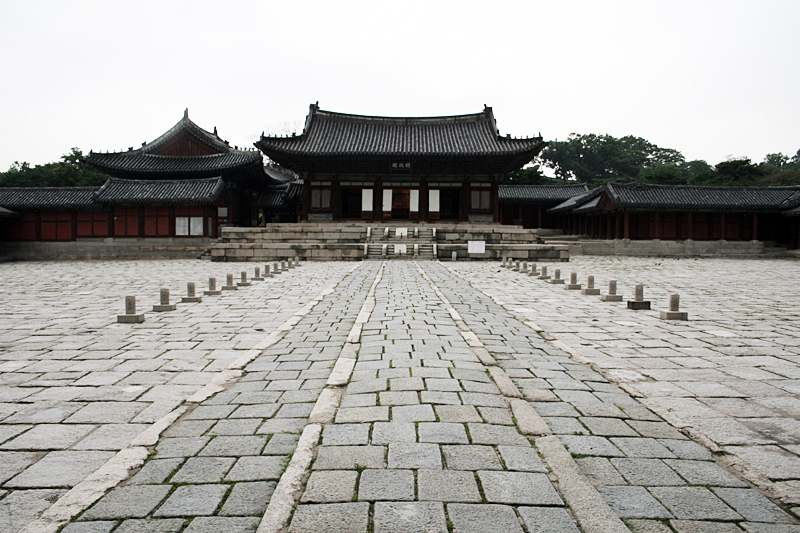
2.1. Myeongjeongjeon (明政殿): The center
Myeongjeongjeon is the main hall—where the queen received officials and the heir learned statecraft.
The courtyard is smaller than Geunjeongjeon’s but sufficient to assert queen and heir’s dignity. When the king held court mainly at Gyeongbokgung, Changgyeonggung was where inner-court politics and education unfolded.
Architecture stresses grace and refinement rather than overwhelming scale.
Docent tip: Compare dragon motifs here with Gyeongbokgung—here they signal queenly authority within hierarchy below the king.
2.2. Tongmyeongjeon (通明殿): The queen’s quarters
Tongmyeongjeon was the queen’s sleeping hall and political space. Joseon queens could wield great influence.
Docent tip: Walk slowly—architecture and ornament reflect taste and personality.
2.3. Chundangji (春塘池): Rest and reflection
Chundangji is the palace pond—where royalty rested. The paths around it are among the most beautiful walks in the compound.
Docent tip: In spring, cherry blossoms around Chundangji are spectacular.
3. History: From glory to tragedy
3.1. Foundation and prosperity (1483–1592)
Built for Queen Jeonghyeon under King Seongjong; a center of royal culture.
3.2. Imjin War (1592–1616)
Heavy damage; later restored under Gwanghaegun, who used it as a main palace—a turning point.
3.3. Assassination of Empress Myeongseong (1895)
The darkest chapter: Japanese agents abducted and murdered the empress at Changgyeonggung. She was the last empress of Joseon in a meaningful sense; her death symbolized the dynasty’s collapse.
Historical meaning: The crime showed the brutality of Japanese encroachment; Korea’s decline accelerated.
3.4. Colonial period and today (1910–present)
The Japanese renamed it “Changgyeongwon” and turned it into a zoo—a humiliation of the royal site.
After liberation, restoration returned dignity to the grounds.
4. Architecture: Delicacy and grace
Planning emphasized women’s safety and convenience. Buildings harmonize with nature—Chundangji and trees amplify beauty. Timber, tiled roofs, and ornament exemplify Joseon style.
5. Seasons
Spring (Mar–May): Cherry blossoms—peak season; weekday mornings for fewer crowds.
Summer (Jun–Aug): Deep green; fewer visitors than spring.
Autumn (Sep–Nov): Reflections in Chundangji.
Winter (Dec–Feb): Quiet, snow-covered stillness.
6. Practical information
6.1. Basics
- Location: 185 Changgyeonggung-ro, Jongno-gu, Seoul (Line 3 Anguk, Exit 3)
- Admission: Adults 1,000 KRW
- Hours: 09:00–18:00 (seasonal)
- Closed: Mondays (open if holiday)
6.2. Tips
- Docent tours help explain the empress’s tragedy.
- Walk Chundangji slowly.
- Reflect at Myeongjeongjeon courtyard.
- Allow ~1.5 hours—compact but deep in history.
- Spring is especially beautiful if you can choose.
6.3. Map
- 네이버 지도: https://map.naver.com/v5/search/Changgyeonggung
- 카카오맵: https://map.kakao.com/link/search/Changgyeonggung
- Google 지도 보기
6.4. FAQ
Frequently asked questions
-
Q. How long should I budget?
A. 60–90 minutes for highlights, or 1.5–2 hours for a slower walk. -
Q. Are hours/closure days fixed?
A. They can change due to seasons, events, or maintenance. Check the official notice before visiting. -
Q. Is it okay on a rainy day?
A. Watch for slippery stone paths, but the palace can feel more atmospheric after rain.
7. References
[1] Cultural Heritage Administration. (n.d.). Changgyeonggung. https://www.cha.go.kr/
[2] Encyclopedia of Korean Culture. (n.d.). Changgyeonggung. https://encykorea.aks.ac.kr/
[3] VisitKorea. (n.d.). Changgyeonggung. https://english.visitkorea.or.kr/
[4] Seoul Metropolitan Government. (n.d.). Seoul palaces: Changgyeonggung. https://www.seoul.go.kr/
[5] Cultural Heritage Administration. (2023). Changgyeonggung and Joseon royal women. CHA publication.
8. Hero image and license
Hero image: Commons: Korea-Seoul-Changgyeonggung-Myeongjeongjeon-01.jpg. Check license for commercial use. Body text is prose-focused.
태그